Beef Shorthorn logo
Cow

Hair Sampling for Genomic and Parentage Testing Guidelines

1. Source of DNA

  • Tail hair root follicles provide excellent DNA for testing.
  • Ensure high-quality samples for to avoid rejection and the need to resupply.

2. Hair Collection

Hair Collection
  • Pull at least 60 hairs from the tail switch (not coat hair).
  • Ensure each hair includes the bulbous root follicle as this is what the lab test.
  • Clearly label each bag with the animal's name, date of birth and full UK tag number. N.B. The Society will provide pre-labelled bags for animals requiring testing as part of the registration process.

3. Technique

  • Ensure tail is clean and dry before extraction.
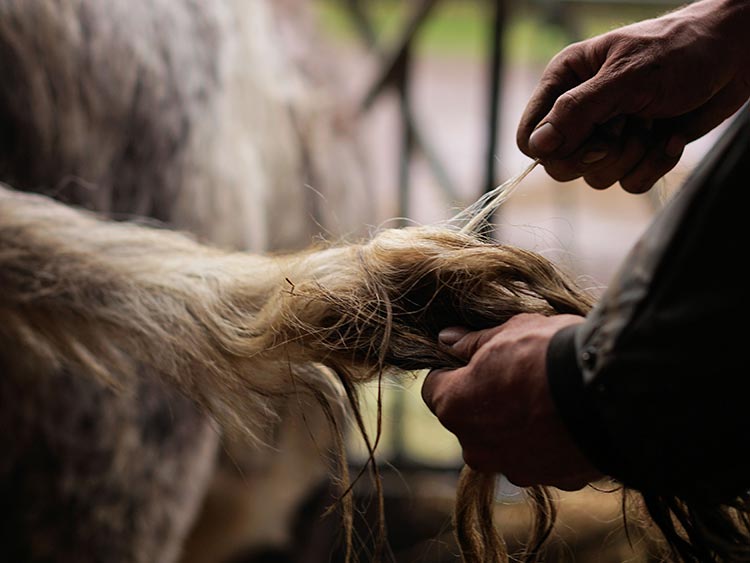
  • Grasp hair near the skin using hands, pliers, or scissors.
Careys tail hair
  • Pull slowly and firmly to extract roots (do not cut).
  • Avoid using shed hair as it may contain degraded DNA.

This short video clip gives a visual example of how to take a tail hair sample.

4. Sample Quality

  • Collect enough hair for sufficient DNA. (40 - 60 follicles).
Sample Quality
  • Ensure samples are clean, dry, and free from substances like sprays or detergents and most importantly excrement.
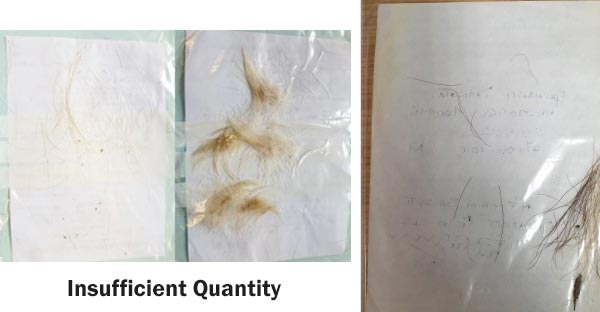
Insufficient QuantityUnacceptable sample

NB: Samples will be rejected if there is insufficient hair for sampling or if they are wet and/or covered in mud/excrement. You will be asked to resupply samples if this is the case.

  • Clearly label each bag with the animal's name, date of birth and full UK tag number.

5. Avoid Contamination

  • Collect samples from one animal per bag.
  • When more than one animal is to be sampled, take extreme care to avoid cross contamination of hair roots between animals ideally wash hands or replace gloves for each animal.
  • If an animal has excessive mud or excrement on the tail, please clean and allow to dry before taking sample.

6. Packaging and Storage

  • Use provided or self-labelled DNA sampling bags.
  • Seal bags tightly.
  • Avoid prolonged exposure to sunlight.

7. Submission

  • Ensure proper labelling with animal details clearly displayed along with your contact information.
  • Send samples promptly to the Society address.
  • Upon receipt you will receive an email acknowledging receipt and an invoice for the DNA charges.  If you do not receive this within 7 -10 days, please contact the office to confirm the sample has arrived.
  • Pedigree certificates are only released at the point all testing has been completed successfully and all invoices relating to the registrations have been paid.

8. Results

NB: These will only be searchable at the point an animal’s registration has been completed.